
WeaveBio is developing BLSF, a bilayer silk fibroin scaffold designed to replace tissue grafts, regenerate, and resorb. The platform is built to eliminate the need for autologous tissue harvest in urethral, bladder, and other hollow-organ reconstructive surgeries.
For decades, reconstructive teams have rebuilt damaged hollow organs by harvesting tissue from elsewhere in the patient: buccal mucosa from the cheek, bowel from the intestine, skin from the thigh. The harvest works, but it increases operative time, creates a second wound, drives donor-site morbidity, and produces outcomes that vary with surgeon experience and patient anatomy.
WeaveBio is building the alternative: an off-the-shelf, animal-free, engineered scaffold designed to deliver the same regenerative outcome, without taking anything from the patient.
Patients per year in the United States undergo a separate tissue-harvest surgery before reconstruction can begin.
Pipeline programs, leading with urethral stricture repair and extending through bladder, urinary diversion, tracheal, and esophageal reconstruction.
One off-the-shelf device. Replaces two surgeries with one, eliminating the harvest.
The Platform
BLSF is a fully synthetic, animal-free scaffold built by combining two engineered films of silk fibroin. The outer film is impermeable, a fluid barrier that supports epithelial regrowth. The inner film is porous, a substrate that guides cell ingrowth, tissue infiltration, and neovascularization. Together they form a tunable construct that integrates with native tissue, supports regeneration, and resorbs as the patient's own tissue takes over.
BLSF can be engineered for use in indications as different as urethra, bladder, and trachea. Porosity, mechanical properties, and resorption window are each tunable to match the regenerative biology of the target organ.
Off-the-shelf. Sterilizable. Animal-free. One manufacturing process. Multiple indications. Economies of scale designed in from the start.


Standard of Care vs. BLSF
Today's gold standard rebuilds the urethra with tissue harvested from the patient's own cheek: an additional surgical site, an additional wound, and an outcome that varies with surgeon experience. BLSF is engineered to replace tissue grafts with an off-the-shelf device, eliminating the need for harvest surgeries.
The Pipeline
WB-101 advances across three urology indications on a single BLSF device. Platform-expansion programs (WB-102–105) extend the same scaffold technology into bladder, conduit, tracheal, and esophageal repair.
| Program | Indication | Preclinical | IDE-enabling | Phase 1 | Phase 2/3 |
|---|---|---|---|---|---|
| WB-101a | Urethral stricture2.3–6.3M US men affected (women a minority) | ||||
| WB-101b | Hypospadias1 in 250 male births (~7,600 / yr) | ||||
| WB-101c | Peyronie's disease4–6.5M US men affected | ||||
| Platform expansion · research | |||||
| WB-102 | Bladder augmentation | ||||
| WB-103 | Urinary conduit | ||||
| WB-104 | Tracheal stenosis | ||||
| WB-105 | Esophageal atresia | ||||
Filled dots indicate progress within each stage. WB-101 spans three urology indications on one BLSF SKU; WB-102–105 are research-stage platform extensions. Prevalence figures sourced from the WeaveBio Unified Market Opportunity model (US AUA, HCUP-NIS, CMS claims, KOL interviews); hypospadias shown as birth prevalence.
Team & Advisors
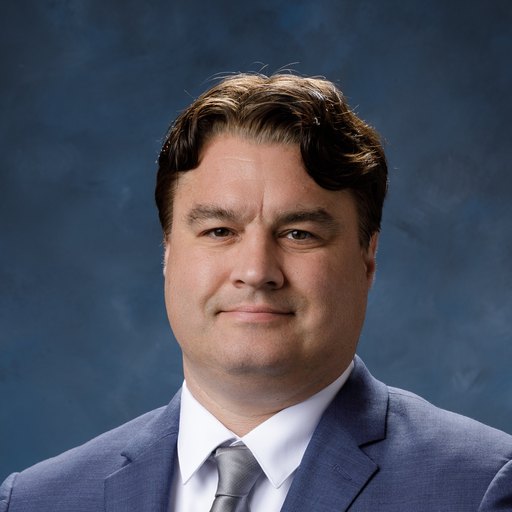
WeaveBio is led by an operating team with decades of combined experience across drug, device, and combination-product development, and advised by a bench drawn from leading programs in reconstructive urology, regenerative medicine, biomaterials, and reimbursement strategy.
Leadership










Advisory Board









"One platform. Three indications underway. A pipeline that extends across hollow-organ reconstruction."
Contact Us
BLSF is ready to advance into the clinic. We are actively seeking investors and strategic partners to raise our Series A and advance into first-in-human (FIH) studies.